
Note
Why Your Automations Fail When Nobody's Watching
Listen instead
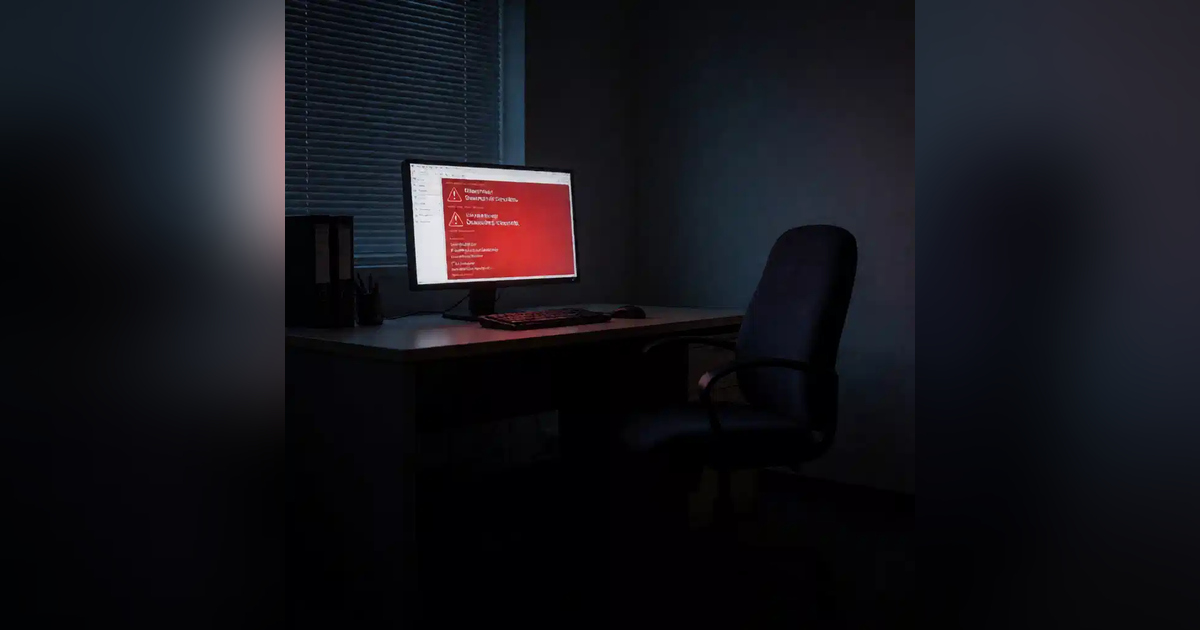
You set up an automation to handle lead intake, follow-ups, or client updates. It runs fine during the day when you're watching. Then you give it permission to run overnight or on weekends, give it a few days, and discover it's been silently failing. Either nothing happened, or worse, something happened but the wrong way.
The automation isn't broken. Your supervision is.
Running an automation without someone watching is like setting a fire and walking away. You need to know what's happening in real time, or you need a system designed to fail loud and safe.
Most people try to solve this by writing better error handling. Catch the edge case, add a fallback, hope the next version doesn't break. That approach costs time you don't have and doesn't actually fix the problem.
What breaks when your automations run unsupervised
The failures that hurt you most are the ones that don't fail loudly.
Lead intake automation that skips a step because upstream data was malformed. That's not a crash. That's a completed step with the wrong result. No error thrown. No alert. The lead just sits there, unfollowed.
Logic that didn't anticipate an edge case. Your code works perfectly for 99% of scenarios, but the 1% breaks silently. The logic runs, the condition is false, nothing happens. You assume it's working.
Timing conflicts. One system is reading while another is writing. The data is incomplete or contradictory. Your automation uses that bad data. Nothing alerts.
Unexpected state. The thing your automation is looking for isn't where it expects. The field is empty. The ID changed. The record was deleted. Automation skips it.
Permission issues. The API token expired. The service revoked access. The request fails silently if your error handling doesn't specifically catch permission denied.
These failures don't crash. They slip past. By the time someone notices, hours have gone by.
Why business hours matter (and what happens without them)
When a human is awake and online, they see the failure immediately. They notice a pattern, ask why it's happening, and fix it the same day.
When the automation runs at 2 AM, the failure sits unnoticed until morning. By then, the blast radius could be: leads not contacted, clients sent the wrong message, data not synced, reporting data missing.
Business hours also mean someone is around to make judgment calls. When an unexpected edge case happens, should you retry, skip it, escalate it, or ask the client first? An automated retry is not the same as a human decision.
At Round Table, we designed our follow-up system to run during business hours only. Monday through Friday, 9 AM to 5 PM ET. If something breaks, someone is awake to notice it and act, not asleep while it compounds. The supervision is not overhead. It's the whole point.
Designing automations that don't fail: five patterns
Start with supervision. If a failure needs human judgment, the automation should run during working hours when someone is awake. Don't try to automate judgment. You'll lose.
Log everything. Not just errors. Every step, every input, every output, every decision the automation made. Make the logs readable. A wall of JSON is useless.
Alert on failure immediately. Slack, email, SMS, Telegram. Something that reaches you in real time. A dashboard you check at the end of the day doesn't count.
Run small first. Before you hand an automation to a client or let it run unsupervised, run it on your own workflows. Let it fail where you'll notice. Fix the edges. Then expand.
Build in a kill switch. If something goes sideways, you need to stop it fast. Not shut down the server, but pause this specific workflow right now without breaking the rest.
How we built a follow-up system that stays safe
Our follow-up engine reminds Regie about due follow-ups. That's it. It's not fancy. It's not AI trying to be smart. It runs five times per day, at 9 AM, 11 AM, 1 PM, 3 PM, and 5 PM ET, Monday through Friday.
It never sends anything to clients. It never tries to guess what to do next. When a reminder is due, it sends to Regie via email and Telegram. He marks it handled or doesn't. The system keeps reminding him until he acknowledges it. Then it stops and logs that he handled it.
Could we make it smarter? Absolutely. Have it send the follow-up automatically, skip the reminders, fully automate the process. But then when it breaks, a client could go uncontacted and nobody would know until someone happened to check. The cost of that failure is way higher than the small effort it takes Regie to mark a reminder done.
The supervision is the feature, not the bottleneck.
Audit checklist: is your automation at risk?
If you're running automations right now, ask yourself these questions.
Does this automation run outside your working hours? If it fails, how long before you notice? Do you have logs you can actually read? Do you get an alert when something breaks? If you needed to stop it right now, could you in under 60 seconds? Have you watched it run live and seen what it actually does? Could a failure here hurt a client relationship or data integrity?
If you answered yes to the first question and no to most of the others, your automation is at risk. It might be working fine right now, but you're running on luck.
The fix is not to make the automation more complex. It's to add supervision. Either a human watches it, or you build a system designed to fail safe and alert loud.
---
If your automations are running in the dark, let's fix that. Book a discovery call with no pitch, no commitment. We'll talk about what safe looks like for your business and where to start. Schedule at crm.wsbroundtable.com/book/regie.